May 26, 2026 • Declan Merritt • 9 min reading time • Prices verified June 17, 2026
Shoulder Rigs for Indie Filmmakers: Stability Without the Chiropractor Bill
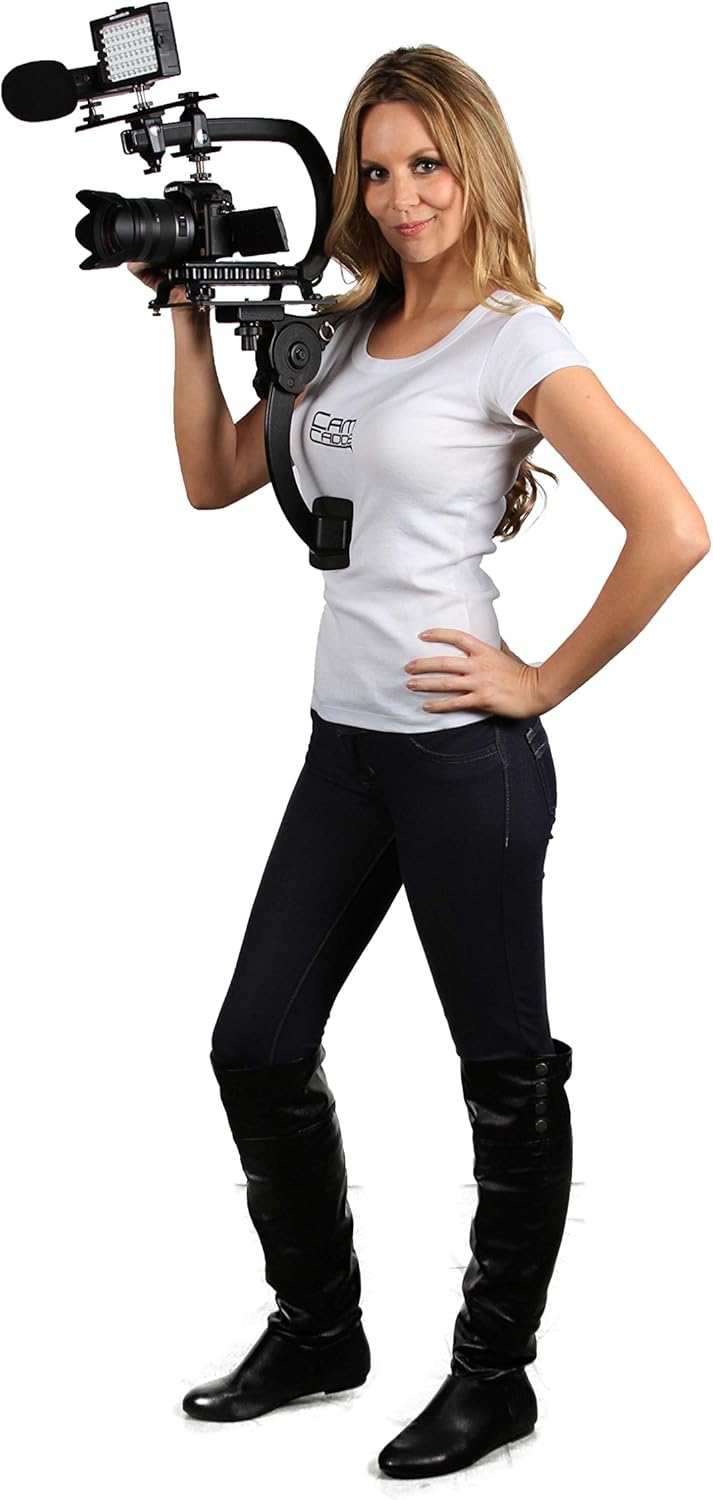
A shoulder rig is exactly what it sounds like: a frame that lets you rest your camera on your shoulder rather than holding it out in front of you with both arms. That shift in weight distribution is a bigger deal than it might seem. When the camera sits on your shoulder — a large, stable platform connected to your entire upper body — the footage you get looks grounded and purposeful rather than shaky and desperate. It also means you can shoot for two hours instead of twenty minutes before your arms give out. If you’ve ever watched a documentary or an indie drama and thought “that handheld work actually feels controlled,” there’s a decent chance a shoulder rig was involved. This guide will walk you through how these systems work, what the meaningful tradeoffs are, and which configurations make sense depending on where you are in your production career.
| EDITOR'S PICK[FLYCAM Galaxy Dual Arm and Vest](https://www.amazon.com/dp/B07GWFFPMC?tag=greenflower20-20)… | Mid-tierFLYCAM Comfort Arm & Vest for H… | Budget pick[Cam Caddie® Scorpion EX Hands F](https://www.amazon.com/dp/B00NG52XMO?tag=greenflower20-20)… | |
|---|---|---|---|
| Max payload | 10 kg / 22 lb | 5 kg / 11 lb | — |
| Dual arm | ✓ | ✗ | — |
| Vest type | — | Foam-padded | — |
| Waist range | — | 28-60" | — |
| Phone mount | — | — | ✓ |
| GoPro mount | — | — | ✓ |
| Price | $448.00 | $209.00 | $49.99 |
| See on Amazon → | See on Amazon → | See on Amazon → |
Why Payload and Balance Matter More Than the Rig Itself
Here’s the thing most first-time rig buyers discover the hard way: the shoulder pad and baseplate are almost secondary. The variable that determines whether your rig is comfortable and controllable is how well the whole system balances around the contact point — the shoulder itself.
Shoulder rigs work by distributing weight fore and aft. You want the center of gravity sitting roughly over your shoulder, not hanging out in front of it (which turns your trapezius into a lever arm) and not tilting back into your neck. This is controlled by how far you slide the camera and lens forward or backward on the 15mm rod system (the horizontal rails that serve as the rig’s spine), and whether you’re running any counterweight at the rear — a battery plate, a monitor arm, an Anton Bauer or V-mount brick.
Pro Video Coalition’s ergonomics framework for working operators makes this point clearly: most operator fatigue complaints trace back not to the rig’s weight but to the rig’s balance point being 2–4 inches too far forward relative to the shoulder pad. Two inches of misalignment at the front translates to significant torque by the end of a full shooting day.
What this means for your buying decision: Before you spend money on a premium shoulder pad or an expensive top handle, spend time thinking about your total payload — your camera body, lens, follow focus if you’re running one, matte box, and any on-board accessories. The Studio Binder camera movement glossary notes that the distinction between “run-and-gun” and “controlled handheld” often comes down to rig configuration discipline rather than gear tier. Know your numbers before you pick your platform.
The Realistic Payload Breakdown (By the Numbers)
A useful way to think about this:
| Camera + Lens | Typical Fully-Rigged Weight | Rig Category to Target |
|---|---|---|
| Sony FX3 + 24–70mm f/2.8 | ~4.5 lbs | Lightweight shoulder kit, 15mm LWS rods |
| BMPCC 6K + cage + lens | ~6–8 lbs | Mid-tier rig, rear counterweight recommended |
| RED Komodo-X + matte box + FF | ~11–14 lbs | Heavy-duty rig, dual shoulder pads, support arm |
| ARRI Alexa 35 full build | 18 lbs+ | Studio shoulder config, support arm mandatory |
These are illustrative build weights drawn from B&H Photo product spec listings and manufacturer documentation — your specific build will vary. The key pattern: every two pounds of forward payload that isn’t counterbalanced adds meaningful operator fatigue over a full shooting day.
Three Rig Categories, Three Decision Frames
Lightweight Run-and-Gun (Under $400 System Cost)
If you’re shooting on a Sony FX30, a BMPCC 4K, or a Canon R5 C without a full accessory stack, you don’t need a heavy modular rig — and adding one will actually make the balance problem worse, not better.
The Shape Shoulder Mount Bundle and Tilta’s Shoulder Baseplate Kit (15mm LWS) both fall in this bracket and represent the category well. Owners across aggregated reviews consistently point to the Tilta system’s compatibility with their broader Tilta ecosystem (nucleus nano follow focus, cage systems) as a meaningful long-term value, while the Shape system draws praise for its machined aluminum quality at the price point. Neither is a wrong answer at this payload tier.
What you’re buying here: a 15mm rod baseplate, a shoulder pad, and optionally a top handle or second grip point. That’s it. Keep it light, keep it balanced, and you’ll get footage that looks deliberately handheld rather than accidentally shaky. Cinema5D’s shoulder rig roundup notes that operators at this tier who add too many accessories before understanding their balance point often end up with rigs that are heavier but not better — a trap worth naming explicitly.
Decision rule: If your camera body plus heaviest lens is under 5 lbs, start here. Add accessories one at a time and re-check balance every time.
Mid-Tier Documentary and Narrative (Roughly $500–$1,200)
This is where the shoulder rig conversation gets more interesting — and where most working indie filmmakers with 6–24 months of production under their belt are actually shopping.
At this tier, you’re likely running a mirrorless body (Sony FX6, Canon EOS C70, or Fujifilm X-H2S) or a BMPCC 6K variant with a cage, a lens in the 1–2 lb range, possibly a monitor, and sometimes an on-board recorder. That’s a build that can push 8–10 lbs before you even think about a follow focus or matte box. Balance management is now a real design problem, not an afterthought.
Wooden Camera’s Unified Shoulder System is one of the most frequently cited configurations in this bracket. No Film School’s support system guide highlights it as a modular platform that grows with your rig rather than forcing you to replace the baseplate when your payload changes — a meaningful consideration when your next camera body might be a step up. The dual-rod system (15mm front, option to add 19mm studio rails at the back) gives you genuine flexibility. Operators report that the rear counterweight arm, once configured with a battery mount, solves the balance equation cleanly for builds in the 7–10 lb range.
The Tilta Hydra Alien jib owner community often overlaps here — filmmakers running shoulder rigs as their primary handheld tool and a jib or slider as a secondary support option. Ecosystem compatibility across your full support kit is worth factoring in.
Decision rule: If you’re regularly shooting narrative scenes longer than 30 seconds handheld, or documentary work where you need to stay mobile for 60-plus minutes at a stretch, the mid-tier category pays for itself in footage quality and physical endurance within a single project.
Heavy Cinema Builds ($1,200 and Up)
At the top of the shoulder rig market, you’re no longer buying a rig — you’re configuring a support system. The distinction matters.
Operators running RED Komodo-X, ARRI Alexa Mini LF, or a fully kitted Blackmagic URSA Cine build are dealing with payloads that require a full support arm (usually an articulating rosette arm connecting the baseplate to a chest pad or vest), 19mm studio rods in some configurations, and often a dedicated follow focus system from Tilta, Preston, or Arri. The shoulder pad itself becomes almost a secondary element — the structural engineering of how the rig’s weight is transferred from the camera, down through the operator’s body, to their feet is the actual design problem.
Wooden Camera, Shape, and Bright Tangerine all offer components at this tier. Rental is a legitimate and often smarter option for builds above $3,000 — the buy-versus-rent math shifts significantly when a rig is used for a single high-budget commercial or narrative project rather than ongoing production. Pro Video Coalition’s operator ergonomics framework recommends that filmmakers price out a 3-day rental against the annualized cost of ownership before committing to a heavy cinema rig purchase, especially for builds where the payload combination is project-specific.
Decision rule: If you’re building for a specific film or commercial with a defined shooting schedule, rent. If you’re doing this configuration at least 20+ days per year, the purchase math starts to favor ownership.
The Hidden Cost: Your Body
This section rarely makes it into gear reviews, and it should. Shoulder rigs done right are genuinely sustainable — operators in cinema and documentary work run them for full career spans. Shoulder rigs done wrong (forward-heavy, no support arm on heavy builds, shoulder pad positioned too far inboard or outboard) create repetitive strain injuries that are slow to develop and slow to recover from.
No Film School’s support guide and Cinema5D’s operator roundup both note that the shift to proper rear counterweighting is the single most frequently cited “I wish I’d done this earlier” adjustment from experienced operators. Running a battery plate or monitor at the rear of your rig isn’t just about trimming balance — it’s about taking load off the muscles that stabilize your shoulder joint under dynamic shooting conditions.
A few practical notes drawn from aggregated operator feedback:
- Shoulder pad width matters more than padding density. A wider pad distributes load across more of the deltoid and trapezius. Operators with narrower shoulder builds sometimes prefer an offset pad configuration.
- Top handles change your balance point. Adding a top handle — standard on most mid-tier kits — shifts the camera’s grip geometry upward and often requires sliding the baseplate rearward to compensate.
- Shoot, stop, re-check. Especially early in your rig configuration experience, the right habit is to stop every 20–30 minutes and assess whether the rig is still balanced where you set it up, or whether accessories added during the shoot have shifted it.
So, Which Rig Should You Buy?
Here’s the decision tree, stated plainly:
- Under 5 lbs total payload, budget under $400: Tilta 15mm Shoulder Baseplate Kit or Shape Shoulder Mount Bundle. Keep it simple, learn your balance point, add accessories slowly.
- 5–10 lbs total payload, mid-production volume: Wooden Camera Unified Shoulder System. The modularity earns its cost over multiple projects and camera body upgrades.
- 10 lbs and above, or full cinema build: Price out a 3-day rental first. If the annualized use case supports ownership, Wooden Camera and Shape both offer heavy-build configurations; evaluate against your specific body and lens stack with a dealer who can walk you through the balance math before you commit.
The goal of a shoulder rig isn’t to look professional — it’s to let you shoot longer, move more freely, and get footage that serves the story. Get the balance right and the rig disappears. Get it wrong and it’s all you’ll think about on set.
Next step: Browse shoulder rig systems and component bundles at B&H Photo (bhphotovideo.com) — their shoulder support category is filterable by rod size and payload range, which makes it a useful starting point for spec-matching your current or planned camera build.