June 16, 2026 • Declan Merritt • 9 min reading time • Prices verified June 17, 2026
Your First Real Video Tripod: What to Look For Beyond 'Heavy Duty'
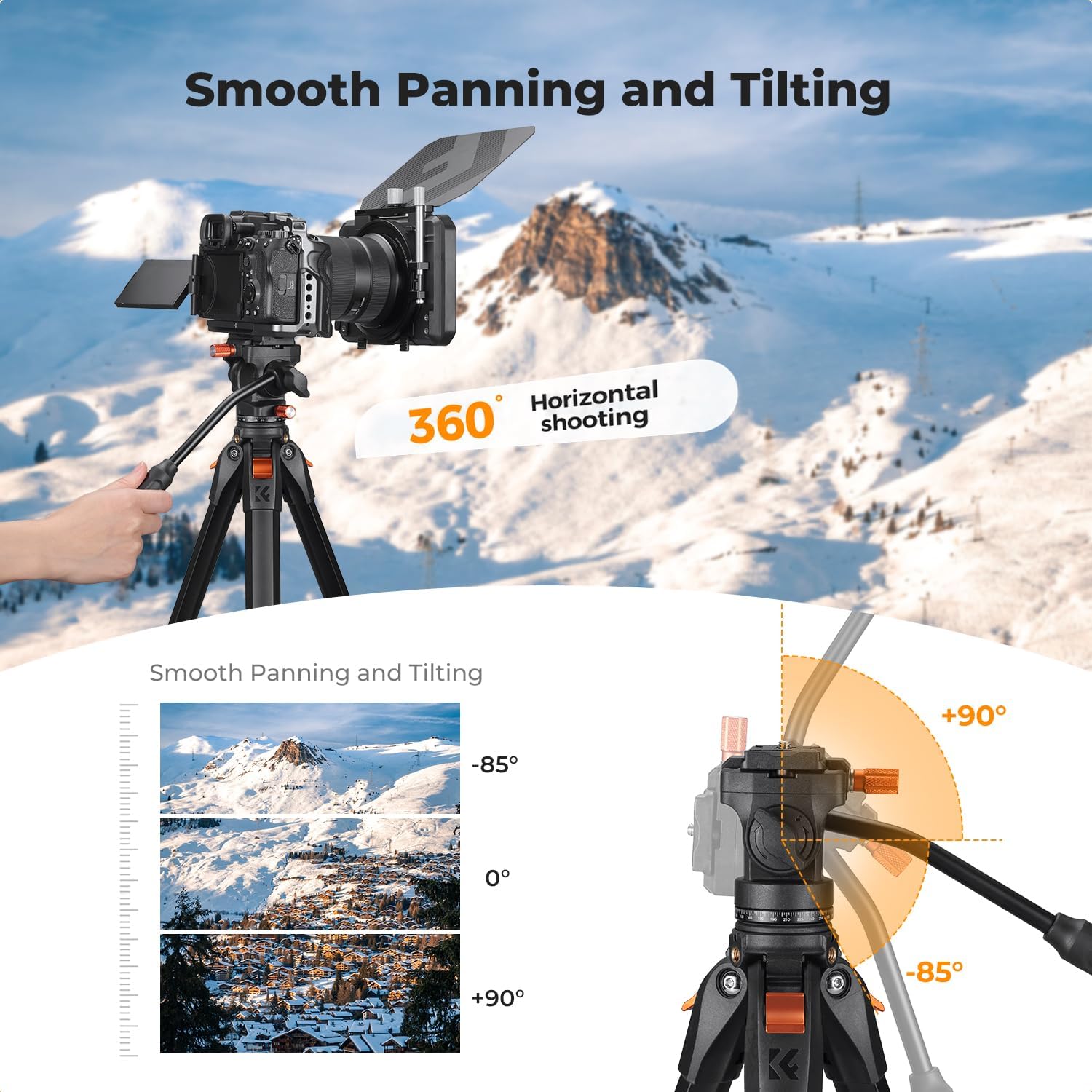
If you’ve been shooting video on a photo tripod — the kind with a ball head that locks solid and doesn’t pan smoothly — you’ve probably already hit the wall. Pans (horizontal camera rotations) feel jerky. Tilts (vertical moves) either stick or flop. And the moment you add a lens longer than 50mm, everything wobbles after you stop moving. A dedicated video tripod solves all of this, but shopping for one is genuinely confusing because manufacturers lean on a single number — the payload rating, which is the maximum weight the head is designed to support — without telling you much about how it actually moves. This guide walks you through the five decisions that actually determine whether a tripod system earns its place on your shoulder bag, your invoice, and your set.
By the end, you’ll have a clear framework: what payload math really means for your specific rig, why counterbalance is the number most buyers skip over, how legs and head interact in ways that can cost you twice, and when the right answer is to rent rather than own.
| EDITOR'S PICK[SIRUI SQ75+VHS10 Carbon Fiber T](https://www.amazon.com/dp/B0DB5NWQSR?tag=greenflower20-20)… | Mid-tier[SIRUI AM-25S Video Tripod](https://www.amazon.com/dp/B07KD3T9BP?tag=greenflower20-20) | Budget pickNEEWER 79"/200cm Video Tripod | |
|---|---|---|---|
| Max Height | 71.7" | 74.8" | 79" |
| Material | Carbon Fiber | — | Aluminum Alloy |
| Counterbalance | 7-Step | — | — |
| Damping Adjust | 4-Step | Adjustable | — |
| Tilt Range | — | +90°/-75° | — |
| Pan Range | — | 360° | 360° |
| Price | $479.00 | $149.00 | $109.99 |
| See on Amazon → | See on Amazon → | See on Amazon → |
Payload Is a Starting Point, Not a Spec to Trust Blindly
The payload rating on a fluid head — say, “supports up to 13 lbs / 6 kg” — sounds simple. It isn’t. The number is the manufacturer’s ceiling, measured under controlled conditions with an ideally balanced load. Your actual rig is rarely ideal.
Here’s the real math you need to run before buying:
By the numbers — a realistic mirrorless cinema rig:
| Component | Approx. Weight |
|---|---|
| Sony FX3 body | 1.5 lbs |
| Sigma 24–70mm f/2.8 lens | 1.9 lbs |
| SmallRig cage + top handle | 0.9 lbs |
| Tilta follow-focus + motor | 0.7 lbs |
| 7” monitor (on arm) | 1.1 lbs |
| Total | ~6.1 lbs |
A head rated at 6.6 lbs (3 kg) — which is where budget fluid heads often land — leaves you with barely 8% headroom. At that margin, operators consistently report sluggish drag response and difficulty dialing in smooth stops. The practical rule, supported by guidance in the B&H Photo Video Fluid Head Buying Guide, is to target a head rated for at least 1.5× to 2× your actual working payload. For the rig above, that points you toward the 8–13 lb (4–6 kg) rated category — the sweet spot where you find heads like the Manfrotto 502 series, the Benro S8Pro, and entry-level Sachtler options.
The ceiling matters too. If you’re pulling a cinema rig — BMPCC 6K Pro with a speedbooster and a full matte box — you’re easily clearing 10–12 lbs before the tripod even gets in the frame. At that weight, you’re shopping heads in the $500–$1,200 range: the Sachtler FSB 8, the Miller Solo 75, or the Libec HSS 250. No Film School’s roundup of video tripods consistently flags the Sachtler FSB series as a benchmark for operators making this jump from entry-level to mid-tier.
Counterbalance Is the Spec Nobody Reads Until They Regret It
If payload is the number everyone reads, counterbalance is the one that actually determines whether your footage is usable.
Counterbalance — sometimes abbreviated CB — is the mechanism inside the fluid head that offsets the forward or rearward tipping force of your camera. When it’s matched to your rig’s center of gravity, tilts feel effortless and stop cleanly. When it’s mismatched, you get one of two failure modes: the camera creeps downward on its own (too light for the spring tension), or it fights you upward when you try to tilt down (too heavy for the CB to compensate). Both ruin handheld-smooth movement, and both are the number-one reason operators return heads or post frustrated reviews.
ProVideoCoalition’s deep dive on fluid head drag systems makes the distinction clearly: drag controls resistance during the move; counterbalance controls the static balance before and after. Buyers conflate the two constantly.
What to look for:
- Stepped counterbalance (most heads under $600): a dial or switch with 3–5 preset positions. Works well if your rig weight stays consistent. Limiting if you regularly swap between a lightweight mirrorless and a heavier cine body.
- Continuous counterbalance (mid-tier and above, e.g., Sachtler flowtech 75, Vinten Vision blue): a smooth range of adjustment. Meaningfully more flexible if your payload changes shoot to shoot.
- Fixed counterbalance (budget heads, often unmarked): tuned at the factory for one weight range. If your rig falls outside it, you’re stuck. Cinema5D’s roundup notes that fixed-CB heads are the most common source of disappointing tilt performance in the $150–$300 segment.
The actionable rule: before you buy, find the counterbalance range spec in the head’s documentation — not the payload ceiling — and make sure your working rig weight sits in the middle third of that range, not at the edges.
Legs and Head Are a System — Don’t Buy Them Separately Without a Plan
Most buyers, especially on a first upgrade, buy the head and legs as a matched kit. That’s often the right call for the $300–$700 budget range. But as your investment grows toward $1,000 and above, you’ll want to understand the interface standards that determine whether a head and legs from different manufacturers can even be combined.
The two dominant bowl standards are 75mm and 100mm, referring to the diameter of the hemispherical socket at the top of the legs that the head sits in. A 100mm bowl head will not seat correctly in 75mm legs without an adapter — and using a mismatched adapter introduces rattle and instability that will show in long-lens shots. PremiumBeat’s tripod selection guide identifies bowl size mismatch as one of the most common and expensive surprises in first tripod upgrades, because photographers moving from flat-plate systems don’t encounter this constraint at all.
Here’s the practical tier logic:
- 75mm bowl: standard for heads in the 6–13 lb payload range. Matched legs (carbon fiber or aluminum) typically weigh 4–6 lbs and spread comfortably. This is the right entry into the video tripod ecosystem.
- 100mm bowl: standard for heads in the 13–33 lb payload range. Legs get heavier (6–11 lbs) and more expensive. This is where you’re building a proper cinema rig support system.
A few mid-tier heads — the Manfrotto 504X, for example — ship with an included 75mm flat-base and a 100mm bowl option, giving you one head that travels across both leg ecosystems. That versatility has real value if you rent legs locally or work out of different rental houses.
On leg material: carbon fiber legs consistently earn the recommendation for operators who move a lot — lighter carry weight, better vibration damping, faster level setup. Aluminum legs at the same load rating weigh roughly 25–40% more. The cost delta in 2026 pricing is real — a carbon set runs $150–$300 more than the aluminum equivalent — but operators in long-run reviews consistently rate the carry fatigue reduction as worth it by the second or third shoot.
The Buy vs. Rent Crossover for First-Time Upgrades
Here’s the decision most guides skip: at what point does it make more financial sense to rent a better head than to buy a lesser one?
The math is straightforward. A Sachtler FSB 8 with carbon legs rents for roughly $75–$120/day in major U.S. markets as of mid-2026. Purchased, the kit runs $1,400–$1,800 new. That’s a 12–24 day rental crossover — meaning if you’ll use this system more than 20 days per year, ownership wins on pure cost. Under that threshold, renting preserves capital and lets you access a better tool when the job demands it.
Where this gets interesting for practitioners building their first real kit: consider owning a solid mid-tier system — something in the $500–$900 range, like a Benro S8Pro on carbon legs — as your daily driver and renting up to a Sachtler or Miller for jobs with longer shooting schedules or higher-end client deliverables. No Film School’s buyer guidance frames this “own-the-floor-rent-the-ceiling” model explicitly for operators in the $50K–$150K annual revenue range, and it holds up.
The counterargument: rental availability is inconsistent outside major metro markets, and rental logistics add friction to fast-turnaround commercial jobs. If you’re booking more than two jobs per month and working outside a major city, ownership math tilts faster than the 20-day rule suggests.
Fluid Head Drag: What the Numbers Mean in Practice
Drag controls how much resistance you feel during a pan or tilt move. Virtually all video-class fluid heads offer adjustable drag — but the range and quality of that adjustment vary dramatically.
Low drag settings are correct for wide-angle shots and fast dramatic pans. Higher drag settings steady long-lens shots and slow, deliberate moves. The issue with budget heads isn’t that they lack drag adjustment — most have it — it’s that the adjustment range is narrow, and the feel at any given setting is inconsistent. Operators in aggregated long-form reviews of heads in the $150–$350 range frequently describe the drag feel as “on or off” rather than graduated.
The benchmark to look for in published specs: a head with at least 3 independent drag steps on both pan and tilt axes, with a minimum drag setting low enough to permit free-wheeling for cable-cam or slider-assist moves. Heads that hit this threshold at accessible price points include the Manfrotto 504X and the Miller CX2, both of which appear in PremiumBeat’s and Cinema5D’s mid-tier shortlists.
One more thing most buyers don’t check: pan bar thread compatibility. Most heads ship with a single pan bar. If you’re operating with both hands or rigging a remote follow-focus, you need a second arm — and not every head’s pan bar socket accepts standard ⅜” bars. Confirm this in the spec sheet before you buy, not after.
The Decision Rule
If you’re making this purchase decision now, here’s the if/then framework:
- If your working payload is under 8 lbs and your budget is $400–$750: buy a matched head-and-legs kit with a stepped counterbalance system in the 75mm bowl category. The Benro S8Pro kit and Manfrotto 504X kit are the two most consistently recommended options in this range across Cinema5D and No Film School roundups.
- If your working payload is 8–15 lbs or you’re booking commercial work: move to a continuous counterbalance head in the $700–$1,400 range and budget for carbon legs separately. The Sachtler FSB 8 is the reference benchmark; the Miller Solo 75 is frequently cited as the value challenger.
- If you’re under 20 shooting days per year at this tier: rent first, own later. Use two or three rental days to confirm which head feel actually matches your operating style before committing.
- In all cases: calculate your actual rig weight before you look at a single payload spec. That number — camera body plus lens plus cage plus accessories — is the only input that makes the rest of this guide relevant to your specific situation.
Your next step: build your payload stack in writing, then use B&H Photo Video’s fluid head filter tools to sort by counterbalance range rather than payload ceiling. That one filter change will show you a meaningfully different — and more accurate — shortlist than most buyers ever see.